
Are High-Speed Overhead Doors Worth the Investment?
Yes, high-speed overhead doors are often worth the investment for businesses with frequent door traffic, temperature-sensitive environments, or demanding daily operations. Their faster opening and closing speeds can reduce energy loss, improve workflow efficiency, and minimize operational delays. Although they typically cost more upfront than traditional commercial doors, the long-term benefits can justify the investment for high-traffic facilities.
For warehouses, distribution centers, manufacturing facilities, and other commercial properties, overhead doors play an important role in daily operations. When employees and equipment constantly move between work areas, slow or inefficient doors can create unnecessary delays, increase energy consumption, and interrupt productivity.
At Garage Door Technik, we understand that choosing the right commercial overhead door is about more than convenience. It’s about finding a dependable solution that supports your business, protects your facility, and delivers long-term value. Our team helps businesses explore commercial door options based on their operational needs, traffic levels, and building requirements.
If you’re considering upgrading to a high-speed overhead door, understanding the potential benefits and costs can help you decide whether the investment makes financial sense.
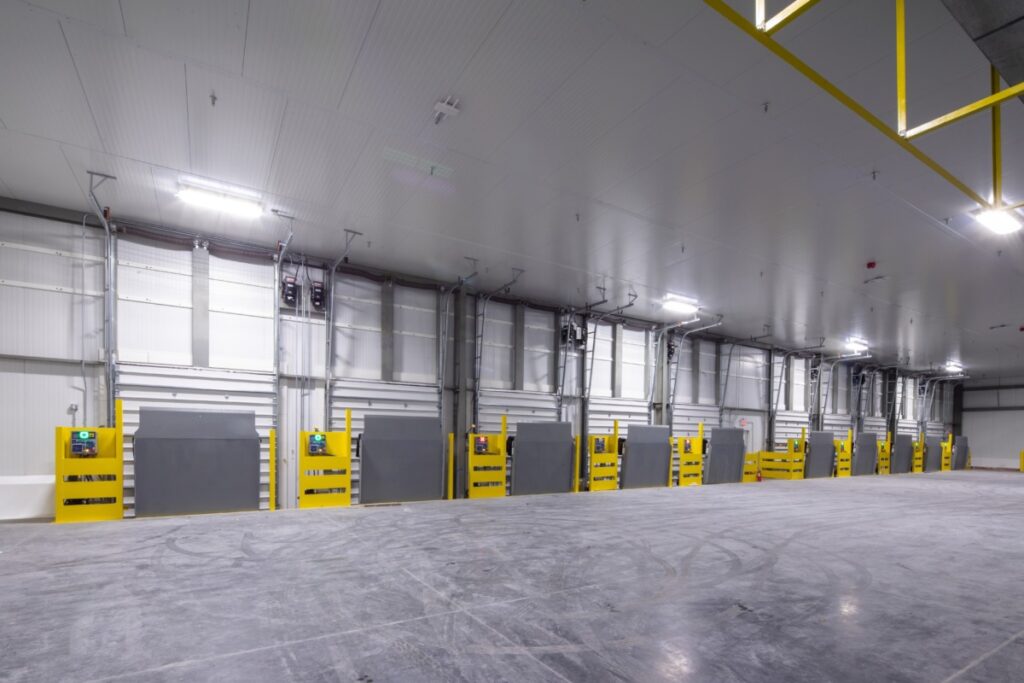
How High-Speed Commercial Doors Improve Business Efficiency and Reduce Costs
High-speed overhead doors are designed to open and close significantly faster than conventional commercial overhead doors. They are especially useful in facilities where frequent access, temperature control, and uninterrupted movement are essential.
While the exact return on investment depends on your building and daily operations, several advantages make high-speed doors an attractive option for commercial properties.
1. How Do High-Speed Overhead Doors Reduce Energy Costs?
High-speed overhead doors can reduce energy loss by limiting how long a doorway remains open during daily operations. This is particularly beneficial for climate-controlled warehouses, manufacturing facilities, and refrigerated storage areas.
Traditional commercial doors may remain open longer than necessary while employees, forklifts, or delivery equipment pass through. During this time, conditioned indoor air can escape while outdoor air enters the building.
High-speed doors help minimize this exchange by opening quickly and closing promptly after traffic passes.
According to the U.S. Department of Energy, air leakage and uncontrolled airflow can contribute to heating and cooling energy losses in buildings. Reducing unnecessary air exchange is one way businesses can improve energy efficiency.
Potential benefits include:
- Reduced heating and cooling loss: Faster closing helps limit the amount of conditioned air escaping through open doorways.
- Improved temperature consistency: Less exposure to outside air can help maintain more stable indoor conditions.
- Lower HVAC demand: Reduced air exchange may decrease the workload placed on heating and cooling systems.
- Better environmental control: Facilities handling temperature-sensitive products may benefit from shorter door-open times.
Actual energy savings depend on factors such as doorway size, traffic frequency, climate, door insulation, and how long the existing door remains open.
For businesses operating climate-controlled facilities, these potential savings can be an important part of the return on investment.
2. Can High-Speed Overhead Doors Improve Warehouse Productivity?
Yes, high-speed overhead doors can improve productivity by reducing the time employees and equipment spend waiting for doors to open and close. In busy commercial environments, even small delays can accumulate throughout the workday.
Consider a warehouse where forklifts regularly transport materials between indoor and outdoor areas. If a traditional overhead door operates slowly, employees may experience repeated interruptions during routine tasks.
A high-speed commercial door can help maintain a smoother workflow by providing faster access between work areas.
Businesses may experience several operational advantages:
- Faster movement of forklifts and material-handling equipment
- Reduced waiting times at frequently used entrances
- Improved traffic flow between warehouse sections
- Fewer interruptions during loading and unloading
- More efficient movement of inventory and supplies
For example, if a faster door saves 10 seconds per operating cycle and completes 100 cycles daily, that represents approximately 17 minutes of reduced door-operation time each day.
This is an illustrative calculation, not a guaranteed labor savings figure. Actual productivity improvements depend on traffic patterns and whether door operation delays other work.
For high-volume facilities, these efficiency improvements can contribute to long-term operational value.
3. Are High-Speed Overhead Doors Safer Than Traditional Commercial Doors?
High-speed overhead doors can improve workplace safety when they are properly selected, installed, and maintained with appropriate safety features. Many models include advanced sensors and automatic operating systems designed to reduce the risk of contact with people or equipment.
In busy warehouses and manufacturing environments, commercial doors must accommodate employees, forklifts, delivery vehicles, and other moving equipment.
Depending on the model, modern high-speed doors may include:
- Photo-eye sensors: Detect obstructions in the doorway.
- Light curtains: Monitor a wider area for objects or people in the door’s path.
- Automatic reversal systems: Stop or reverse door movement when certain obstructions are detected.
- Breakaway or self-repairing designs: Help reduce damage and downtime after some types of accidental impact.
- Automated activation: Allow doors to respond to approaching traffic using compatible sensors or controls.
The Door & Access Systems Manufacturers Association (DASMA) provides industry guidance and technical standards related to commercial door systems and safe operation.
Not every high-speed door includes the same safety technology, so businesses should compare available features before choosing a system.
Professional installation and routine maintenance are also essential for keeping safety components functioning properly.
4. How Much Do High-Speed Overhead Doors Cost Compared to Traditional Doors?
High-speed overhead doors generally have a higher initial purchase and installation cost than standard commercial overhead doors. However, the total cost of ownership may be lower in certain high-traffic or climate-controlled applications.
The final price depends on the type of door, dimensions, operating speed, materials, safety features, and installation requirements.
When comparing high-speed doors with traditional commercial doors, consider these factors:
| Cost factor | Traditional commercial door | High-speed overhead door |
|---|---|---|
| Initial investment | Generally lower | Generally higher |
| Opening and closing speed | Slower | Faster |
| Energy-saving potential | Depends on insulation and usage | May reduce air exchange |
| High-traffic efficiency | Can create longer wait times | Designed for frequent operation |
| Maintenance | Varies by door type | Varies by design and usage |
| Long-term value | Suitable for many standard applications | Often advantageous in high-traffic settings |
Rather than focusing only on installation costs, businesses should evaluate how the door will perform over several years.
A simple return-on-investment calculation can help:
Estimated payback period = Additional upfront investment ÷ Estimated annual operating savings
For example, if upgrading to a high-speed door costs an additional $6,000 and generates $2,000 in verified annual savings, the estimated payback period would be three years.
These figures are hypothetical and should not be interpreted as actual installation pricing or guaranteed savings. Maintenance costs, energy consumption, and productivity improvements should all be considered when evaluating the investment.
5. Which Businesses Benefit Most From High-Speed Overhead Doors?
Businesses with frequent door cycles, controlled indoor environments, or time-sensitive operations typically benefit the most from high-speed overhead doors. Facilities that use their overhead doors only occasionally may not experience enough savings to justify the additional upfront cost.
High-speed commercial doors are particularly useful in several industries.
Warehouses and distribution centers
Frequent forklift movement, inventory transfers, and shipping activities make fast door operation valuable for maintaining workflow efficiency.
Manufacturing facilities
High-speed doors can help separate production areas, support controlled environments, and improve movement between work zones.
Cold storage and food processing facilities
Specialized high-speed doors can reduce unwanted air exchange, helping facilities maintain temperature-controlled conditions.
Automotive and service facilities
Busy service centers may benefit from faster vehicle access and reduced delays between work areas.
High-traffic commercial buildings
Facilities with frequent deliveries or equipment movement can use high-speed doors to improve access and reduce unnecessary waiting.
Before investing, businesses should evaluate door usage, building conditions, required safety features, and anticipated operating savings.
Frequently Asked Questions About High-Speed Overhead Doors
How fast do high-speed overhead doors open?
Many high-speed commercial doors operate at speeds of approximately 24 to 100 inches per second, depending on the manufacturer, model, and application. Some specialized models operate outside this range.
Do high-speed overhead doors require more maintenance?
Not necessarily. Maintenance requirements depend on the door’s design, operating frequency, and environment. High-speed doors should receive regular professional inspections to maintain reliable performance and proper safety operation.
How long do high-speed overhead doors last?
High-speed overhead door lifespan depends on construction, operating cycles, environmental conditions, and maintenance. Many are designed for frequent operation, but actual service life varies by model and usage.
Are high-speed overhead doors worth it for small businesses?
They can be, especially for small businesses with frequent deliveries, temperature-controlled spaces, or constant vehicle movement. Businesses with limited door traffic may find that a conventional commercial overhead door provides better overall value.
Upgrade Your Business With High-Speed Overhead Doors From Garage Door Technik
Investing in the right commercial overhead door can make a meaningful difference in your facility’s daily operations.
High-speed overhead doors offer potential advantages in energy efficiency, productivity, workplace safety, and operational reliability. While the initial investment may be higher, businesses with demanding operating environments can benefit from improved performance and reduced long-term expenses.
At Garage Door Technik, we help businesses explore dependable commercial overhead door solutions designed to meet their specific needs. Whether you’re upgrading an existing system or considering a new installation, our team can help you determine whether a high-speed overhead door is the right choice.
Ready to improve your facility’s efficiency with a high-speed overhead door?
Contact Garage Door Technik today to discuss your commercial overhead door needs and find a solution that supports your business for years to come.