
What Should You Do If Your Garage Door Won’t Close Completely?
If your garage door won’t close completely, first check for objects blocking the door or its safety sensors, then clean and inspect the sensor lenses for proper alignment. If the door still stops, reverses, or leaves a gap, the problem may involve incorrect opener settings, damaged tracks, worn rollers, a spring issue, or another mechanical fault that should be inspected by a garage door professional.
A garage door that refuses to close is more than an inconvenience. It can leave your home, vehicles, and belongings exposed while signaling a problem with an important safety system. Garage Door Technik helps homeowners diagnose and repair garage doors and openers that do not operate as they should. From sensor and opener problems to damaged hardware and door alignment issues, professional service can identify the underlying cause instead of simply treating the symptom. The goal is to restore smooth operation while making sure the complete garage door system works safely and reliably. Knowing a few basic troubleshooting steps can also help you determine whether the problem has a simple solution or requires professional garage door repair.
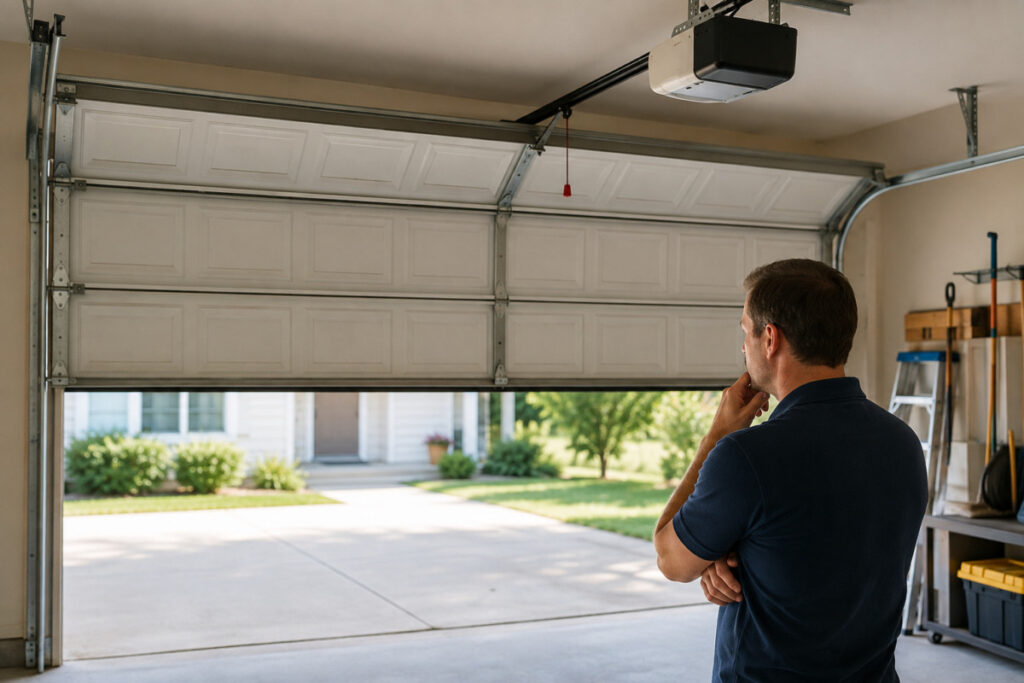
Why Your Garage Door Stops Before Closing All the Way
A garage door that stops short of the floor or reverses while closing is commonly reacting to a safety sensor problem, an obstruction, an opener setting, or resistance within the door system. Start with simple visual checks before attempting any adjustments.
Why Does My Garage Door Start to Close and Then Go Back Up?
If a garage door starts closing and immediately reverses, check the safety sensors first. These photoelectric sensors are positioned near the bottom of the garage door opening and are designed to detect objects in the door’s path.
The Door & Access Systems Manufacturers Association (DASMA) explains that residential garage door operators manufactured after 1992 must include photoelectric sensors or another safety-reverse feature that complies with UL 325 standards. DASMA also notes that photoelectric sensor beams are typically positioned no more than six inches above the floor.
A sensor can prevent the garage door from closing when:
- A box, bicycle, trash can, or other object blocks the beam
- Dirt, dust, or cobwebs cover a sensor lens
- One sensor has been bumped out of alignment
- A sensor wire is loose, cut, or damaged
- Something attached to the door interrupts the beam as the door moves
LiftMaster troubleshooting guidance specifically identifies misaligned or momentarily obstructed safety sensors as a reason an opener may refuse to close.
Remove anything near the doorway, gently clean the sensor lenses with a soft cloth, and check whether both sensors appear securely mounted and pointed toward each other. Avoid bypassing or disabling the sensors to force the garage door closed.
What Should I Check When My Garage Door Won’t Close?
Start with the safest and simplest causes. A quick inspection can sometimes identify the problem without taking apart the opener or touching high-tension components.
Use this troubleshooting sequence:
- Check the doorway for obstructions. Look along the floor, tracks, and sensor path for objects that could interfere with movement.
- Inspect the safety sensors. Clean the lenses and make sure neither sensor has been knocked out of position.
- Look at the tracks. Visible dents, debris, or misalignment may keep the rollers from traveling smoothly.
- Watch the door as it moves. A crooked, jerky, or unusually noisy door may indicate a mechanical problem.
- Check the opener for warning signals. Flashing lights or diagnostic indicators may point toward sensor, wiring, or travel-related problems.
- Stop if you see damaged hardware. Broken springs, loose cables, bent tracks, or a door hanging unevenly call for professional attention.
Do not repeatedly operate a garage door that is binding or moving unevenly. Continued operation can place additional stress on the opener and other components.
Could the Garage Door Opener Be Causing the Problem?
Yes. If the sensors are clear and the door appears mechanically sound, the garage door opener may be responsible for stopping the door too early.
Garage door openers use travel settings to determine where the fully open and fully closed positions are. If those settings are incorrect, the opener may stop before the bottom seal reaches the floor. Some systems can also reverse when they detect excessive resistance during closing.
Manufacturer troubleshooting guidance recommends manually checking the door for binding or obstructions when a door stops or reverses. If the door is binding or sticking, LiftMaster recommends contacting a trained door systems technician.
Possible opener-related causes include:
- Incorrect travel limits
- Safety sensor faults
- Damaged sensor wiring
- Opener logic or control problems
- Excessive resistance during door travel
- Improper opener-to-door adjustment
Avoid randomly changing force or travel settings. Incorrect adjustments can interfere with the garage door opener’s safety functions.
When Does a Garage Door That Won’t Close Need Professional Repair?
Professional service is appropriate when basic checks do not restore normal operation or when the door shows signs of a mechanical problem.
Call a garage door technician if:
- The door closes unevenly or appears crooked
- The door repeatedly reverses without an obvious obstruction
- A spring appears broken or separated
- A cable is loose, frayed, or off its drum
- The tracks are visibly bent or damaged
- The opener produces grinding or unusual noises
- The door feels unusually heavy
- The safety sensors will not stay aligned
- The door leaves a gap even though the opener reaches its closed position
Garage door springs and cables operate under significant tension. These components should not be loosened, adjusted, or replaced as a DIY repair.
How Garage Door Safety Features Affect Closing Problems
Modern garage door openers are intentionally designed to stop or reverse when certain safety conditions are detected. That means a garage door refusing to close can sometimes indicate that a safety feature is doing exactly what it was designed to do.
LiftMaster recommends a three-step garage door opener safety check that includes verifying the presence of properly positioned photo eyes, blocking the sensor beam to confirm the door does not close, and checking whether the door reverses after contacting a rigid object approximately 1.5 inches high.
According to LiftMaster, its safety sensors are designed to stop a garage door from closing when an obstruction is detected.
If your garage door fails a manufacturer-recommended safety test, discontinue unnecessary operation and arrange for professional inspection. A garage door that closes is useful, but a garage door that closes safely is the priority.
How Can You Prevent Garage Door Closing Problems?
Regular visual inspections and maintenance can help identify small problems before they prevent the garage door from closing.
Homeowners can periodically:
- Keep the tracks and sensor areas free of stored items and debris
- Clean photoelectric sensor lenses
- Watch for loose or damaged hardware
- Listen for new grinding, scraping, or squeaking noises
- Pay attention to changes in opening and closing speed
- Test safety reversal features according to the opener manufacturer’s instructions
- Schedule professional service when the door begins operating differently
A garage door system contains interconnected components. Problems that appear to come from the opener may actually originate with the springs, tracks, rollers, cables, or door balance, which is why a complete system inspection can be valuable when the cause is unclear.
Frequently Asked Questions About Garage Doors That Won’t Close
Why won’t my garage door close even though nothing is blocking it?
The safety sensors may be dirty or misaligned even when there is no visible obstruction. The problem can also come from damaged wiring, incorrect opener travel settings, track resistance, or another mechanical issue.
Can sunlight interfere with garage door sensors?
Strong direct light can interfere with some photoelectric sensor systems under certain conditions. If the problem consistently occurs at a particular time of day, have the sensors and their positioning inspected rather than disabling the safety system.
Why does my garage door leave a gap at the bottom?
A gap can result from incorrect opener travel settings, an uneven floor, a worn bottom seal, door alignment problems, or mechanical issues preventing full travel. A technician can determine whether the problem is with the door, opener, or sealing system.
Is it safe to keep using a garage door that won’t close properly?
Repeatedly operating a door that reverses, binds, moves unevenly, or has damaged components is not recommended. If basic obstruction and sensor checks do not solve the problem, professional inspection is the safer next step.
Get Your Garage Door Closing Properly Again
A garage door that won’t close completely can indicate anything from a blocked sensor to a mechanical or opener problem. Addressing the cause promptly helps protect your property while keeping the door’s safety features working as intended.
Ready for professional garage door repair? Contact Garage Door Technik today to have your garage door inspected and get it closing smoothly and safely again.